Thursday, 21 May 2015

ORPHE SMART SHOES


Orphe Smart Shoes


Orphe Sneakers serve as Bluetooth audio-visual controllers and a customizable light display system. Each sole features 100 serially controlled LEDs that allow users – think dancers, DJs and other performance artists – to map movements to sound and light. In their iOS app you can create your own unique lighting plans or maps. Share these maps online with other wearers and inspire the Orphe artist community.
The API is open so developers can create their own applications for the hardware.  Currently set for sale in 5 sizes, there are still a few packages available on Indiegogo for $299 (approx #60,000). If the campaign breaks $70,000 (approx #14m), they’ll add two more sizes and the full suite of apps – [OSX at $50,000 (#10m) and Android at $70,000 (#14m)].

The thinnest TV ever

lg display thin tvIn the future, commuters will be shuttled around in self-driving cars, and couch potatoes will be able to peel their TVs off of walls.

LG Display (LPL)showed off its newest, thinnest-ever TV panel at a press event in South Korea Tuesday. The 55-inch display is about as thin as a DVD and weighs less than a 13-inch MacBook Pro, which is 4.5 pounds, or 2 kilograms. It can be hung on a wall using a special magnetic mat.Amazing as it is, the ultra thin TV is only a proof of concept for now -- you won't find it in a Best Buy near you anytime soon. But it shows the potential of OLED, the technology that makes it possible to make high definition displays flexible, thin and lightweight.
At the press event, the head of LG Display's OLED group told reporters the company would increase its OLED production this year.
OLED displays are made from sheets of organic (carbon-based) materials which emit their own light. As a result, manufacturers can eliminate the layer of fluorescent backlighting found in traditional displays, such as LCD screens.
LG and Samsung sell several OLED TV models already, but they cost thousands of dollars, and aren't nearly as thin. It might take another five years for the prices to come down in order for larger OLED displays to be commercially viable, according to the U.S. Department of Energy.
The real benefit of OLED technology will most likely be realized within wearables, digital cameras, smartwatches, tablets and mobile devices. The malleable technology provides more saturated colors, higher contrast and greater brightness than LCD displays.

THIS SMART LAMP FINDS YOUR PHONE, GLOWS WHEN YOU GET ALERTS, AND MORE


Pretty Smart Lamp

The lamp connects to your smartphone through Bluetooth. As soon as it recognizes the device, they are harmoniously synced. This means that if you ever misplace your phone, you can double-tap Pretty Smart Lamp to set it off and find it. But it does much more than locate cells that have gone missing. The Pretty Smart Lamp has beauty and  brains with its Bluetooth capabilities, which allows it to communicate with other smart devices around your home. For example, you can program the lamp to adjust your smart thermostat when its sensors detect a dip in temperature.


The Pretty Lamp development team has partnered with Yonomi, a developer that has made an app to link like-devices to each other around the house (Think "Internet of Things"). If you have an Android device, you can download the Yonomi app to start using the Pretty Smart Lamp to control gadgets around your house, An iOS edition of the app will be coming out this summer.


Pretty Smart Lamp has you covered in terms of lighting, too. The product has a light sensor that senses brightness and adjusts accordingly. You can also select various colors and lighting sequences to suit your mood.

There are several different lasered designs to choose from when you make a $66 pledge on the Pretty Smart Lamp Kickstarter page, including a cloud, polar bear, and human hand. However, there is also a Himalayan Salt Rock version ($91) and an alabaster edition ($119) if you’re going for a specific look. The Pretty Smart Lamp will begin shipping in late summer.
The making of a pretty smart lamp raffle...https://youtu.be/9stvp9BDlyU

Wednesday, 20 May 2015

OCZ’s NEWEST SOLID STATE DRIVES CAN READ NEARLY THREE GIGABYTES PER SECOND


OCZ is rolling out a new line of solid state drives with the business world in mind. The OCZ 6000 Series takes advantage of the latest and greatest in interface specifications, boasting 16-channel NAND, third generation PCIe x4, and NVMe support. They also have higher than average read and write speeds, topping out at 2900 MB/s sequential read, and 1900 MB/s sequential write.
On top of all that, the OCZ 6000 Series drives come with a number of relevant efficiency and convenience features. They are built with temperature sensors and automatic thermal throttling, plus user-selectable power envelopes, so you won’t have any trouble playing it cool. Because of their 2.5″ form factor, the drives are hot-swappable.
Included in the release are two families of drives, both in the 2.5″ form factor. The base 6000 Series is designed for read-intensive applications, like video streaming or storing data records. It’s only built to endure one drive write per day over the course of five years, though that’s probably more than enough for most users.
The 6300 Series is designed for mixed use, like web servers, cloud computing, or data processing. It’s built for up to three drive writes per day over the course of five years, but boasts a slightly lower IOPS and sequential write bandwidth than the 6000.
Both the 6000 and 6300 Series drives will be available in one, two, and four terabyte physical capacities, but are all loaded with the IDEMA Advanced Formatting, so their usable capacities are 800, 1600, and 3200GB respectively
OCZ also mentions a 6.4TB capacity version of the 6300 model, but clarifies that it will be available in a future release. There’s also specifications for a half height, half length form factor release of the 6300 Series, but the company hasn’t mentioned when it will be available.
                                                                       

ELECTROLOOM (A RADICAL NEW MACHINE THAT PRINTS READY-TO-WEAR CLOTHING)


What if there were a better way? What if, instead of travelling to a store or waiting a couple days for something (a cloth) to arrive, you could simply click a few buttons and have a piece of clothing materialize right before your eyes. It might sound ridiculous — but that’s exactly what SF-based startup Electroloom is working on. For the past few years, the company has been developing a machine that can create real, fabric-based (though non-woven) clothing.
The company’s eponymous device is difficult to describe. The creators liken it to a 3D printer for clothing, but it’s unlike any 3D printer you’ve ever laid eyes on. Rather than creating garments with a series of snap-together plastic parts, the Electroloom uses a process it calls Field Guided Fabrication — which looks less like 3D printing and more like a cotton candy machine that’s gone haywire.

Basically, the machine employs a technique called electrospinning to convert a liquid solution into fibers, which are squirted out of a nozzle and guided onto a 3D mold by the machine’s internal electric field. Once there, they bond together to form a non-woven fabric that can flex, drape, and fold just like the fabrics you’re wearing right now.

The process is still a little rough around the edges, but the team’s latest prototypes are already capable of producing things like tank tops, skirts, and beanies. The team is also working to develop new liquids that can be spun into fabric, so users will have more options on color and fabric type.
It’s a work in progress, and to help raise money for further development, Electroloom’s creators have recently turned to the crowd-funding community on Kickstarter for help. You can’t pre-order the finished product quite yet, but the company is offering a small number of alpha prototypes to developers interested in helping refine the technology. You’ll need to dish out $4,500 to get your hands on one, and if that’s too steep, a pledge of 100 bucks will get you one of Electroloom’s  printed skirts or tank tops.


By Drew Prindle - May20, 2015

Tuesday, 19 May 2015

The Apple iTV is dead: Steve Jobs didn't 'crack it'

Image result for The Apple iTV is dead: Steve Jobs didn't 'crack it'One of the most anticipated Apple (AAPL, Tech30) products for many years has been an all-in one Apple TV, which would have a super-high resolution screen and on-demand programming. But, like so many other rumored tech products that never see the light of day, the "iTV" turned out to be an iUnicorn.Image result for The Apple iTV is dead: Steve Jobs didn't 'crack it'
On the heels of activist investor Carl Icahn forecasting that Apple would produce 55-inch and 65-inch TVs next year, The Wall Street Journal reported on Monday that Apple had abandoned plans for its own television a year ago.
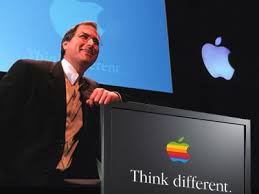
Rumors of an all-in-one Apple TV started in full-force after Walter Isaacson's 2011 biography of Steve Jobs suggested that the device was one of Apple's next plans.
"I'd like to create an integrated television set that is completely easy to use," Jobs told Isaacson. "It would be seamlessly synced with all of your devices and with iCloud. It will have the simplest user interface you could imagine. I finally cracked it."
Apparently not.
According to the Journal, Apple didn't see enough value in releasing its own television. It considered adding face-tracking cameras for video calls, a transparent screen illuminated with lasers and "4K" ultra-high definition resolution.
But those features weren't compelling enough, in Apple's opinion, to risk bringing them to market in a notoriously cutthroat and low-profit margin television business.
Though the project isn't officially dead, there is no one at the company currently working on the TV project, the Journal reported.
A spokesman for Apple declined to comment for this story.
Apple hasn't abandoned its television ambitions entirely, however. In March, the company's CEO Tim Cook promised big plans for its Apple TV set-top box.
"Apple TV will reinvent the way that you watch television, and this is just the beginning," he said on stage at a product event.
The price of Apple TV was slashed to $69 this year, down from the previous price of $99. Apple iswidely expected to announce an update for the Apple TV at its June Worldwide Developers Conference.
The new Apple TV is expected to feature a live TV cable-like package, priced between $30 and $40 a month, according to the report.
At that price point, the package would cost less than a typical American household's cable television subscription. But it would also include fewer channels -- it would be what people in the industry call a "slimmed-down bundle." It would compete with several online TV subscription services, such asSony (SNE) PlayStation Vue, Dish's (DISH) Sling TV, and CBS (CBS) and Nickelodeon's online streaming options.by cnn

Wednesday, 13 May 2015

LG Watch Urbane


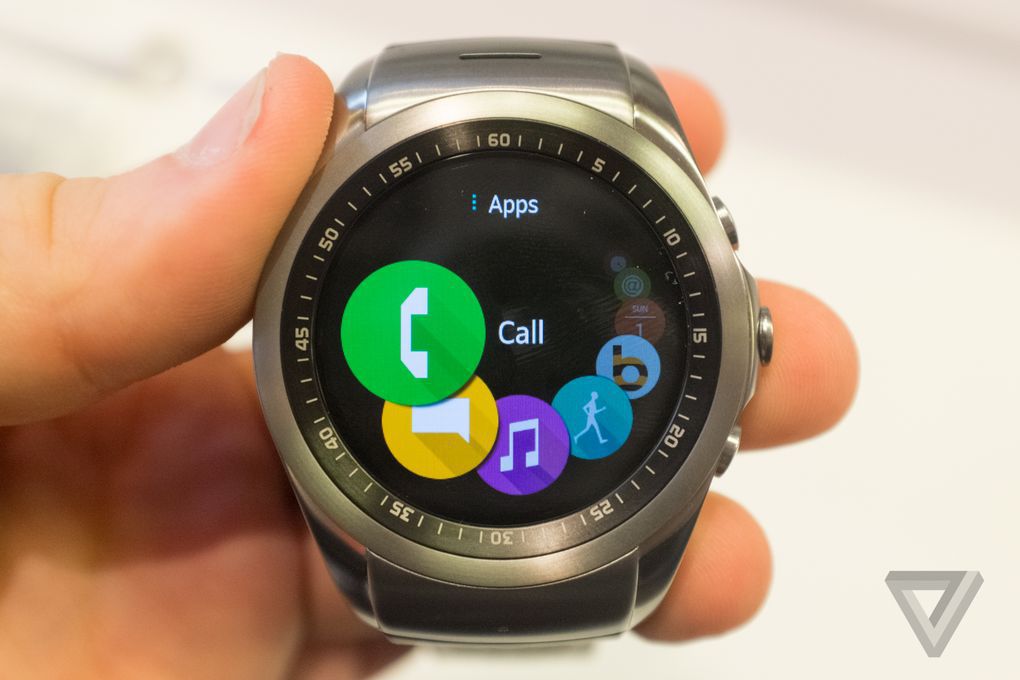
Not everyone wants a sporty-looking smart watch, and while the G Watch R is a good looking piece of wearable tech, the solid black body and chunky bezel wasn’t for everyone. Step forward, the LG Watch Urbane, an all-new design with a slightly tweaked name, and the same G Watch R specs underneath.
The numbered bezel has gone, and the body now comes in classy gold or classic silver. The flattened, polished bezel catches the light very attractively, and there’s no fuss around the edges, or a multitude of buttons to ruin the minimalist and attractive style. Flip the watch over and the rear panel has been smoothed out, and the screw holes removed, adding to the high-class feel. It’s light, and although the body is slightly thicker than the G Watch R, it isn’t awkward or annoyingly large.

Perhaps,  the main difference between the Watch Urbane and a traditional, expensive wrist watch is weight. It’s especially interesting to compare it to the the LG Watch Urbane LTE, which is (oddly) a completely different watch that has considerably more heft to it, and felt like a pricier piece of equipment. Comparing the two made the Watch Urbane feel a little toy-like against its LTE-equipped, WebOS-based OS cousin. Something different happens when you put it up against the G Watch R, which despite being only a few months old, looks surprisingly dated. It’s not ugly or unusable, just not as modern, design-wise.


Highs

  • Best circular Android Wear watch display
  • Strong two-day battery life                         
  • It makes a fashion statement
  • Latest Android Wear version installed

Rating

Our Score 8
User Score 0

Lows

  • Divisive design
  • New software features aren’t very inspiring
  • Leather strap needs a lot of wearing in

Shop

"The LG Watch Urbane’s bold style and rose gold finish look just right peeking out from beneath     the cuff of a neatly pressed shirt, but its flashy, masculine look won’t appeal to everyone."

Release price         $350 (#70,000)
Release date         5/2015

Design

Dust and moisture resistant          Yes
Width          1.7 in
Height          2 in
Depth           0.4 in
Dust and moisture rating          IP67
Color          Gold, Silver

Display

Screen size               1.3 in
PPI               245
Display technology               OLED
Resolution               320 x 320

Sensors


Accelerometer, Digital compass, Gyroscope, Heart rate

Processor

Speed
RAM                  
1.2 GHz
512MB
Manufacturer Qualcomm
Brand Snapdragon 400

Storage

Internal 4 GB

Battery

Battery capacity 410 mAh